A cashew takes a surprising journey before it reaches your bowl. Here is a look at the craft behind every kernel.
It is easy to forget how much work sits inside a small handful of cashews. Before it reaches your table, every kernel has passed through many pairs of hands and several careful stages. Here is a look at that journey, from the tree to the pack.
A tree with an unusual fruit
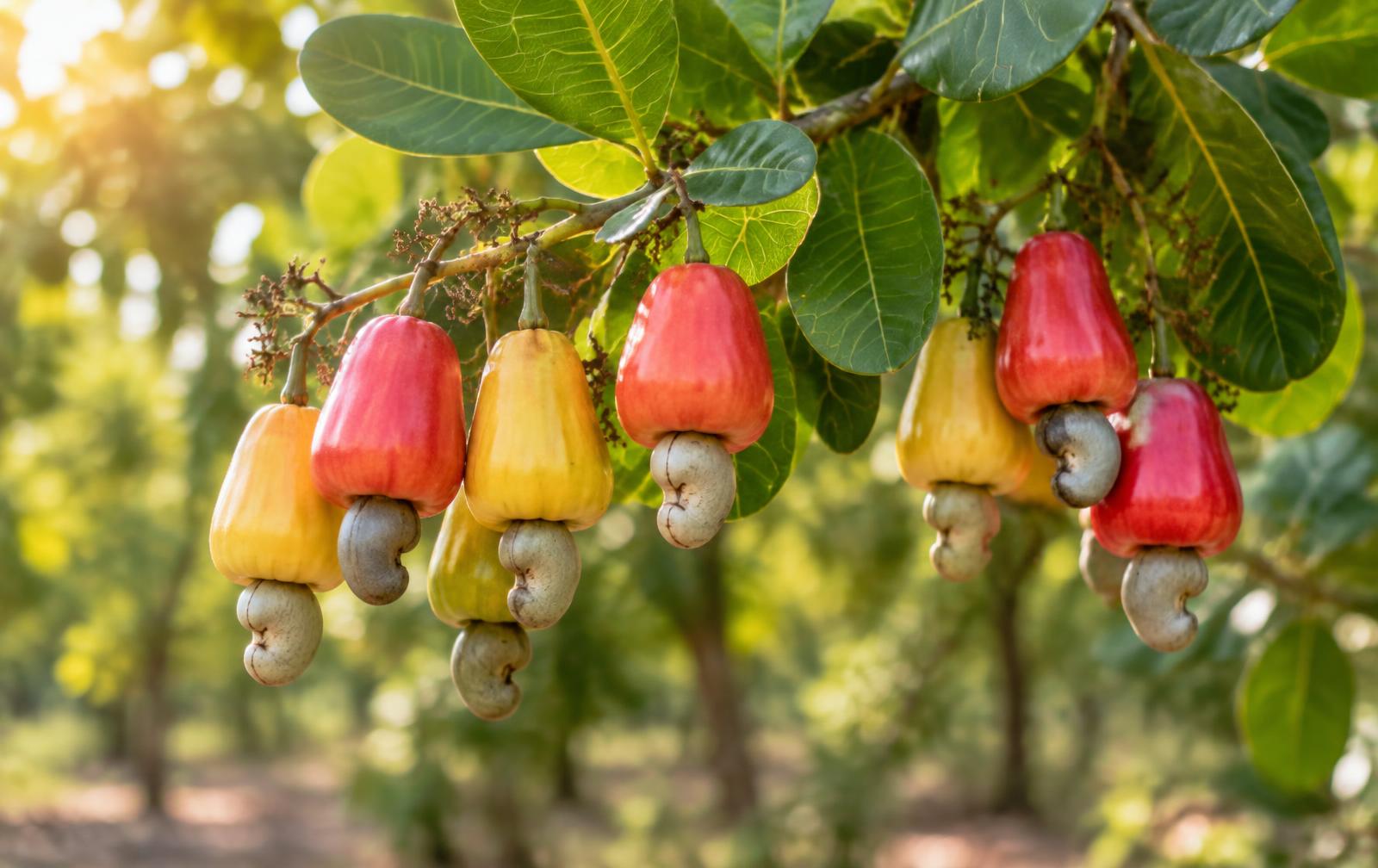
The cashew tree is an evergreen that thrives in warm coastal regions, including the coast of Karnataka where Santhosh Foods is based. It produces something unusual: the cashew nut does not grow inside a fruit. Instead, the nut hangs outside, attached to the bottom of a juicy, pear-shaped swelling called the cashew apple. The apple is eaten fresh or turned into juice in some regions, while the nut is the part prized around the world.
Harvesting and drying
When the nuts mature, they fall or are collected from the ground, separated from the apple and spread out to dry in the sun. Drying brings down moisture so that the nuts can be stored and handled safely. Nuts that are properly dried are easier to process and keep their quality better.
Why the shell needs care
The raw cashew shell is not like an almond or walnut shell. Inside it is a thick, caustic liquid that can irritate the skin. This is the reason you never see cashews sold in the shell the way peanuts or pistachios are. The nuts must be treated and shelled carefully so that the oil does not touch the kernel.
Shelling
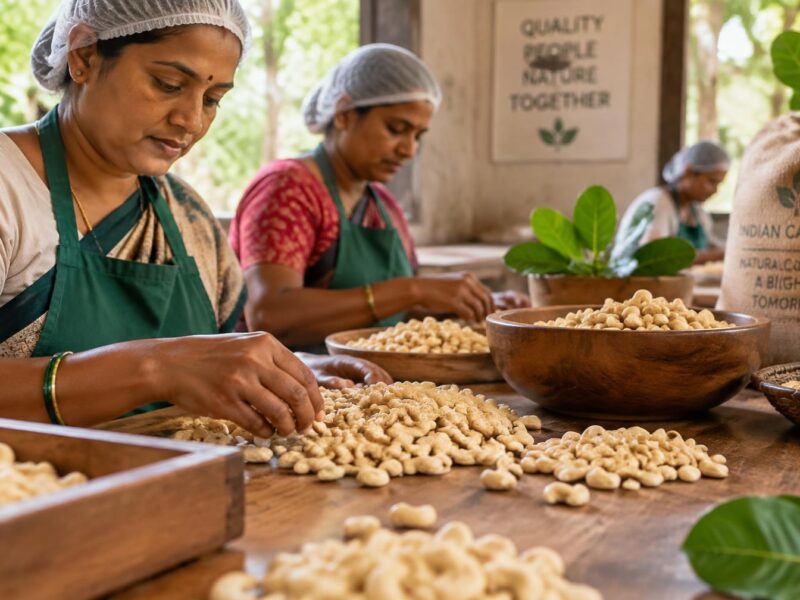
After the nuts have been prepared, the hard shells are cut or cracked open to release the kernel. This is delicate work. Press too hard and the kernel breaks, press too softly and the shell does not open. Skilled workers and well-set machines make a visible difference to how many whole kernels come out, which is one reason experience matters so much in cashew processing.
Drying and peeling
Each kernel is wrapped in a thin brown skin. The kernels are dried gently so the skin loosens, and then it is peeled away to reveal the creamy white cashew we know. Careful peeling matters, because rough handling scratches or breaks the kernel.
Grading and sorting
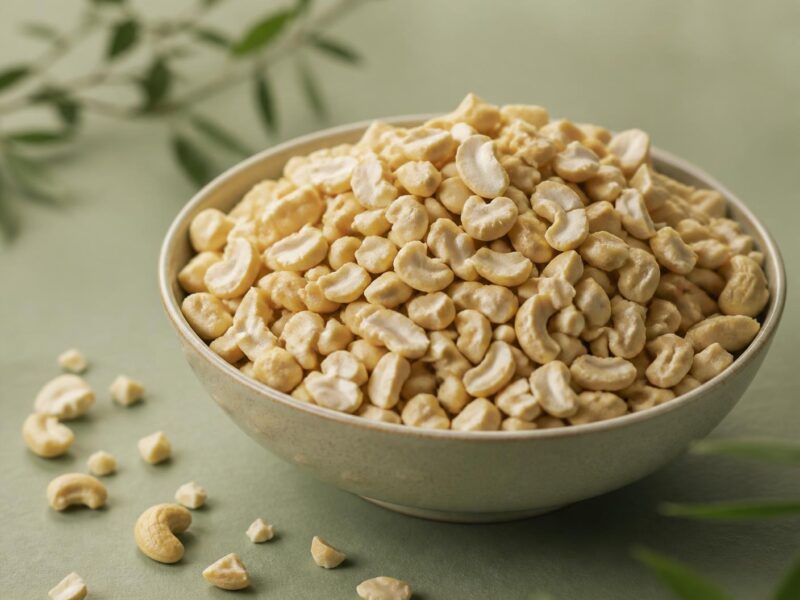
Next comes grading. The kernels are sorted by size, shape and colour. Whole kernels are separated from splits and pieces, and any that are discoloured or damaged are removed. This stage is where “full” and “broken” cashews are born. It is also where a lot of the quality you can taste is decided, because consistent size and colour come from patient sorting.
Packing
Finally, the cashews are weighed and packed. Good packing protects the kernels from air, moisture and light, which are the main causes of staleness. Santhosh Foods packs in formats for every need: 250g, 500g and 1kg packs for homes, and 10kg and bulk packs for businesses.
Two decades of experience
Santhosh Cashews was established in 2000, and that experience is what shapes how we select and handle cashews today. The process above may sound simple on paper, but doing it well, batch after batch, comes from years of practice. The next time you enjoy a handful of cashews, you will know a little of the care that went into it.
Quick takeaways
- The cashew nut grows outside the fruit, not inside it
- Raw cashew shells contain an irritating oil, so shelling needs care
- Grading by size and shape is what separates whole kernels from pieces
- Careful packing protects flavour all the way to your kitchen
Have a question about our cashews?
Message us for pack sizes, availability or bulk requirements.