Both are the same good cashew. The difference is in how you plan to use them, and here is a simple guide to choosing between whole kernels and pieces.
Walk into any dry-fruit shop and you will usually see cashews sold in two ways: whole, and broken. Many people assume the broken ones are a lower-quality product. They are not. Full and broken cashews come from exactly the same kernel and have the same taste. The difference is simply one of shape, and shape decides where each one works best.
Why some cashews end up broken
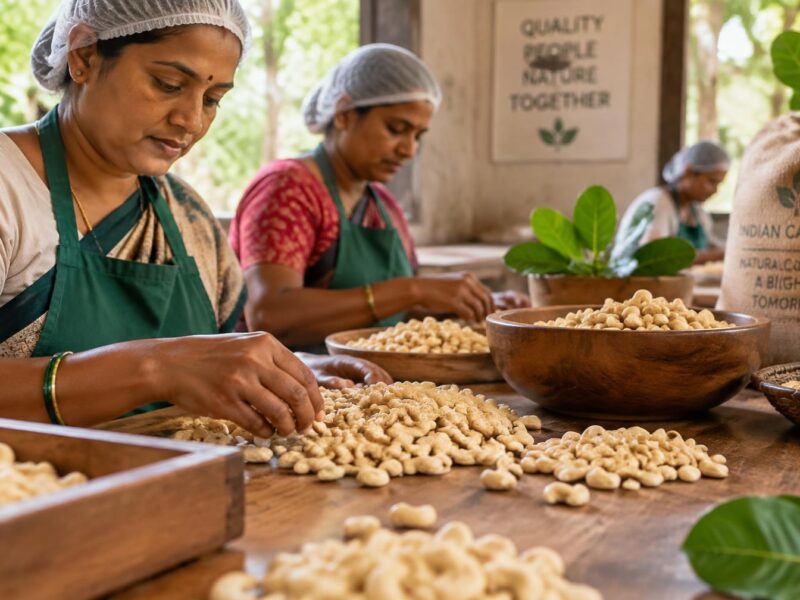
A cashew kernel is delicate. During processing, the shell is removed, the thin brown skin is peeled off, and the kernels are sorted by size and appearance. Along the way, some kernels split in half and some break into smaller pieces. Rather than treat these as waste, processors grade them separately so that each shape can be used where it makes the most sense.
In general, you will find these groups:
- Whole kernels – the complete, uncracked cashew, usually the most sought-after grade.
- Splits – kernels that have separated into two halves along their natural line.
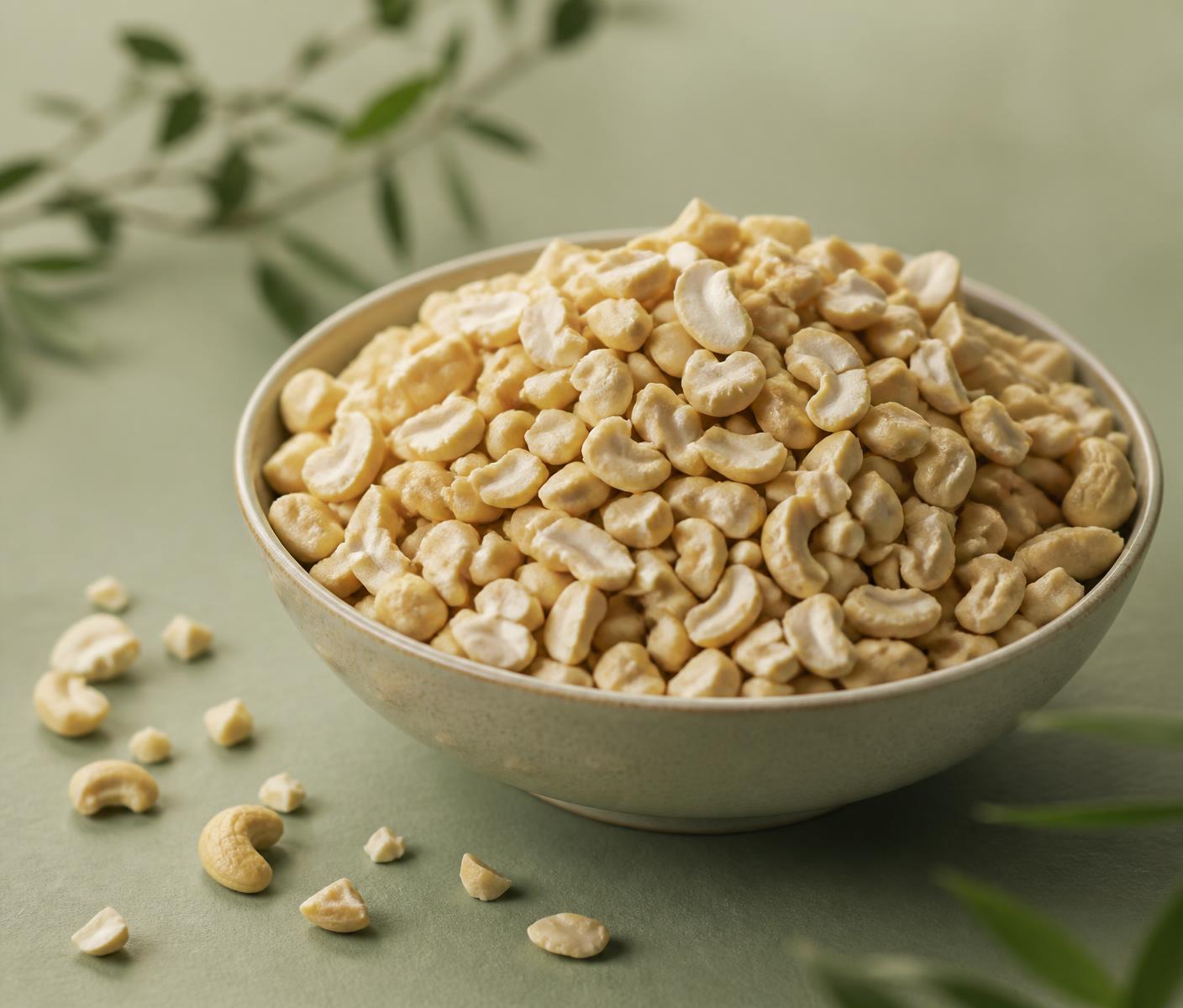
- Pieces – smaller broken bits of different sizes, from large chunks to fine granules.
At Santhosh Foods we keep this simple for our customers: Full Cashews for whole kernels and Broken Cashews for carefully selected pieces.
When to pick full cashews
Whole kernels earn their place when the cashew is meant to be seen and enjoyed on its own. Think of:
- Snacking. A handful of whole cashews has a satisfying crunch that pieces simply cannot match.
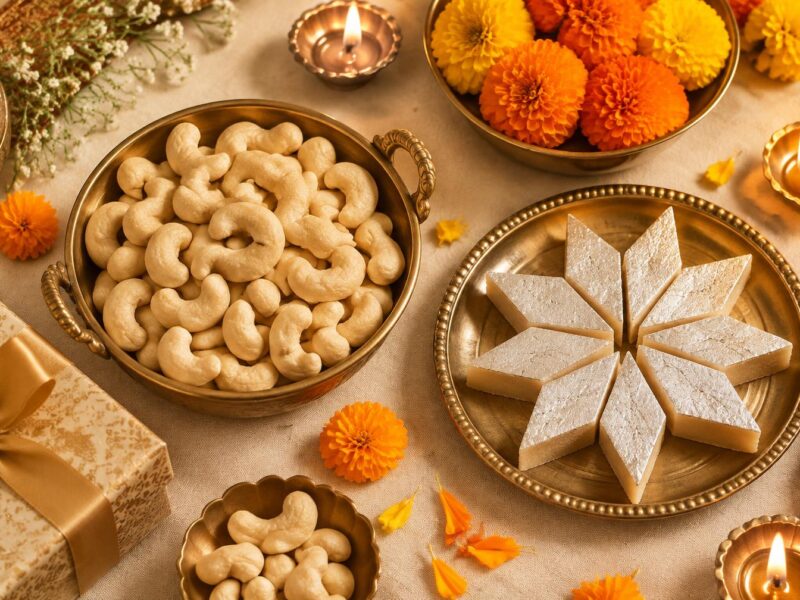
- Serving guests. Whole cashews in a bowl, plain or lightly roasted, always look generous.
- Gifting. Festival hampers and dry-fruit boxes look better with whole kernels.
- Garnishing. A few whole or halved cashews on top of biryani, pulao, kheer or halwa finish a dish beautifully.
When to pick broken cashews
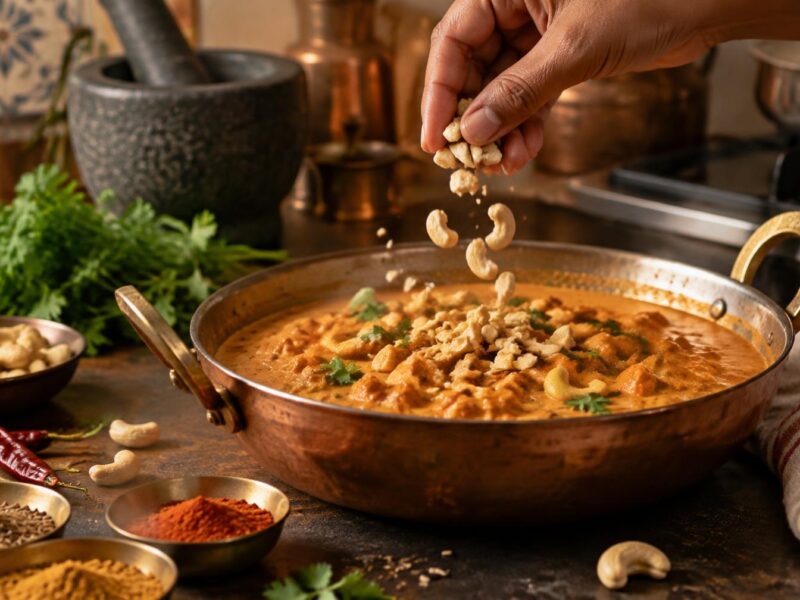
Pieces are made for the kitchen. Once a cashew is ground, soaked or baked into something, nobody can tell whether it began as a whole kernel or a piece, so there is no reason to pay for appearance you will never see.
- Gravies and curries. Soaked and blended, broken cashews give korma, butter masala and other rich gravies a smooth, creamy body.
- Sweets. Cashew barfi, kaju katli, laddus and payasam all start with ground or chopped cashew.
- Baking. Cookies, cakes, brownies and breads take chopped cashews very well.
- Everyday cooking. Fried rice, upma, pulao and stir-fries all benefit from a small handful of pieces.
Is there a difference in nutrition?
No. Because full and broken cashews are the same kernel, they offer the same nutrition. Cashews are a source of healthy fats, plant protein, fibre and minerals such as magnesium, zinc and copper, though they are also energy dense, so a small handful goes a long way.
The simple rule
If people will see the cashew, go whole. If it melts into the recipe, go broken.
Many homes and almost every sweet shop and caterer keep both. If you are buying for the first time, start with a 250g pack of each and see which one you reach for more often. Both are available from Santhosh Foods in 250g, 500g, 1kg, 10kg and bulk formats, so it is easy to scale up once you know your favourite.
Quick takeaways
- Snacking, serving and gifting: choose full cashews
- Gravies, pastes and curries: choose broken cashews
- Sweets and baking: broken cashews do the job at a better value
- Not sure? Keep a small pack of each at home
Have a question about our cashews?
Message us for pack sizes, availability or bulk requirements.